Damage detection powered by Artificial Intelligence, calculated with the reference methodology of the Italian market. From the photo to the estimate: in seconds, not days.
Request a demoEvery claim starts with a simple but crucial question: how badly is this vehicle damaged, and how much will it cost to repair?
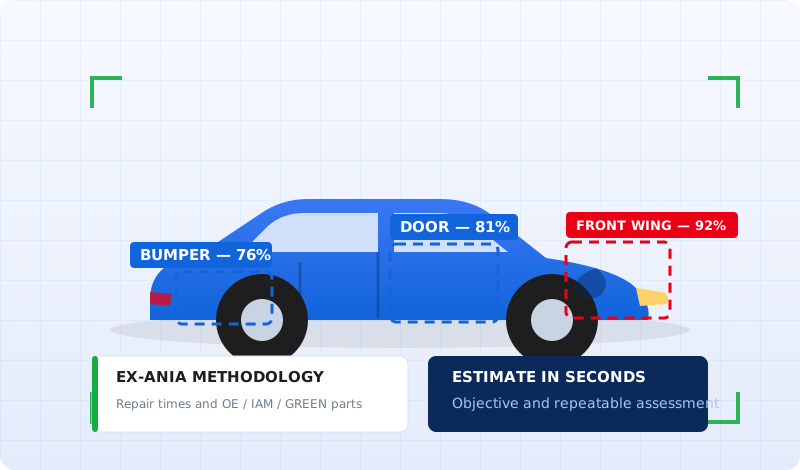
The intelligent detection system by AI-Mobility answers that question in real time, analysing images of the damaged vehicle and returning an assessment that is objective, repeatable and immediately usable by insurers, loss adjusters and repairers.
Unlike the generic damage recognition systems available on the market, our artificial intelligence does not stop at the visual identification of the damage.
A dent, a scratch or a break is only the starting point: the result of the analysis is linked directly to the calculation of time and cost.
The historical reference standard of the Italian body repair market, built into our engine for calculating repair times.
The calculation is connected to all three supply channels, for an assessment that is economic as well as technical.
The output is therefore not just what is damaged, but how long the repair takes and how much it will cost, according to the methodology the Italian market has recognised and used for decades.
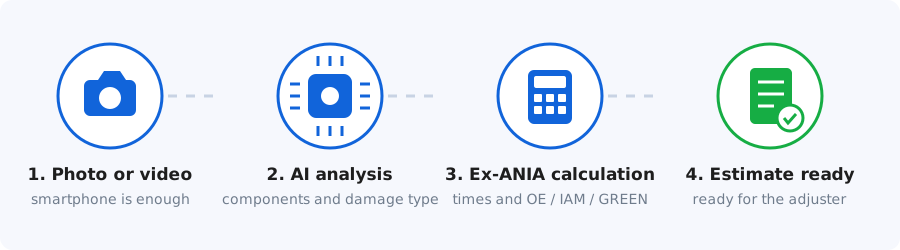
Photos or video of the damaged vehicle, taken with a smartphone too, with no dedicated equipment required.
The algorithm automatically identifies the components involved and the type of damage on each of them.
Results are processed according to the Ex-ANIA methodology and linked to the technical data of the vehicle, for an estimate of time and cost consistent with industry standards.
A structured assessment, ready to be validated by a loss adjuster or used directly in the claims settlement process.
Speeding up the first notice of loss (FNOL) and reducing settlement times, with an objective first estimate available from the very first contact with the policyholder.
A support tool that cuts the time spent on the initial inspection and minimises the margin of human error in the assessment.
Write to us for a demonstration on your own real cases.